Annapurna Base Camp Trek in Monsoon
My 7-Day Journey Through Rain, Clouds & Courage
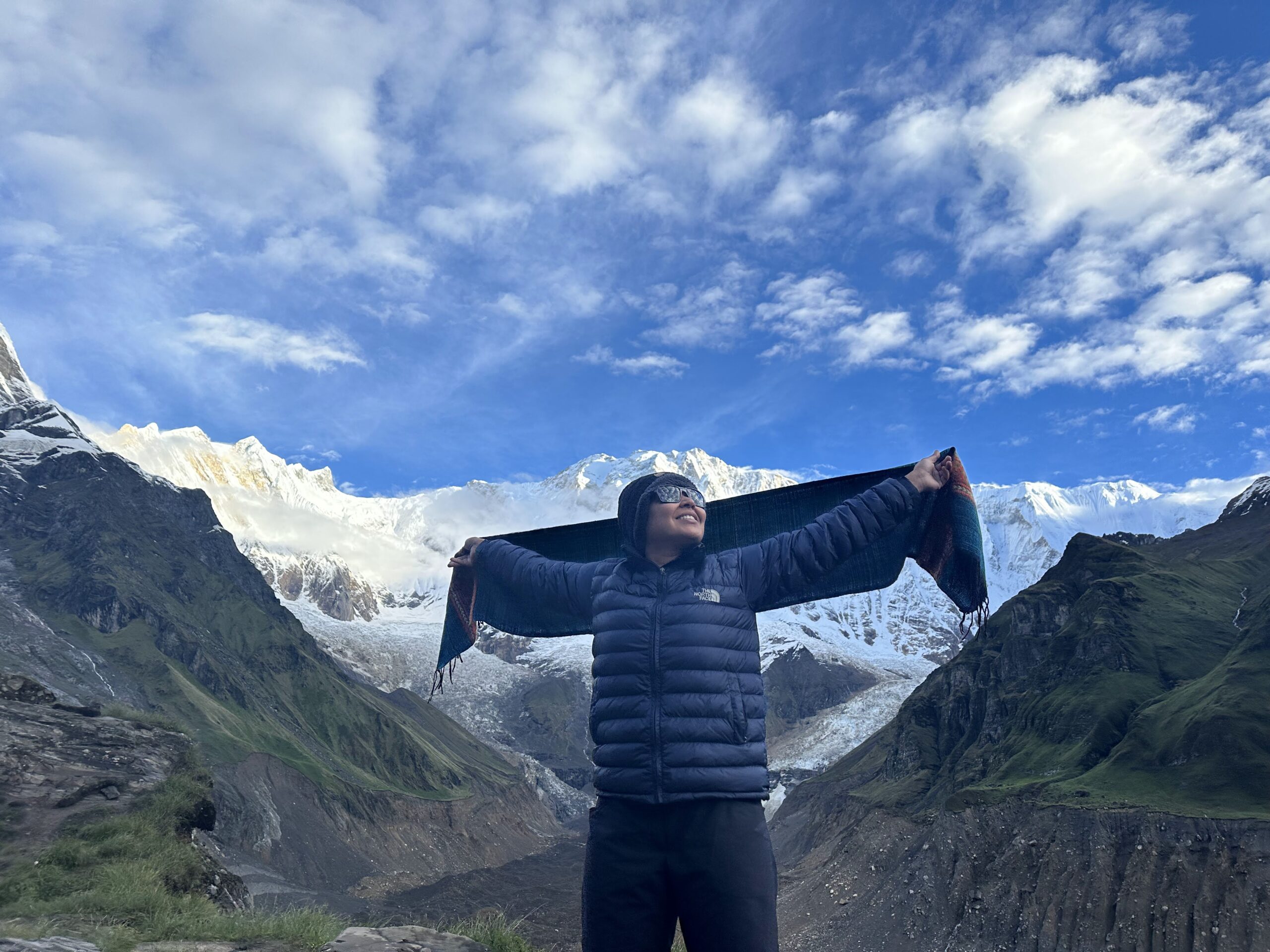
The mountains don’t always welcome you with sunshine.
Sometimes they test your patience, your strength, and your faith.
Hello, fellow adventurers and mountain lovers! I'm Neetu, the Rajasthani woman who's trekking through monsoons and chasing Himalayan dreams on grit alone. After conquering the rain-soaked roads of Kathmandu and pokhra —My Annapurna Base Camp (ABC) trek in July was exactly that — rain every single day, soaked clothes, slippery trails, tired legs… and yet one of the most beautiful journeys of my life. This is my real experience of trekking 84 km to Annapurna Base Camp during monsoon — full of emotions, struggles, kindness of strangers, and magical mountain moments. 84 km of slippery stones, cloudy peaks, and unbreakable spirit—I'm now deeper in Nepal's embrace. This is my first monsoon trek blog from the Himalayas, where every raindrop tells a story. Thanks for joining my 7-day journey through clouds, courage, and kindness—stay tuned for more raw adventures from the roof of the world!
Remember that stormy July 2nd night when rain pounded Three Sisters Guesthouse’s tin roof? With Lt. Col. Prashant Singh’s help securing permits, TAAN waiving my TIMS, Manoj ji delivering ACAP, and Three Sisters providing a free guide—everything fell into place despite the “no solo trek” rules. Gear rented, community cash tucked away, I wondered if this hitchhiking dreamer could reach Annapurna Base Camp. Discover the full continued journey right here in this blog..
Green Flag Launch: Monsoon Trek Begins
On July 3rd, 8AM, Three Sisters (trek company who partners with my without money trek mission)waved me off from their guesthouse with a heartfelt community send-off—friends gathered to motivate and wish success for my challenging Annapurna Base Camp monsoon trek. They arranged a gypsy ride to Australian Camp, but nature tested us early: a landslide blocked the road for nearly an hour. Embracing the wild roads and monsoon unpredictability, 10:22AM, we finally arrived at Australian Camp—where the official ABC trekking journey truly began.

Day 1: Australian Camp → Landruk (16 km)

We started our trek from Australian Camp via Thula Kharka. After walking through lush green forests, we stopped for lunch at Hotel Namaste Annapurna, Tolka.The trail turned into an adventure right from day one as we hit our first water crossing of the monsoon trek. The muddy track, carved with tyre marks and bordered by dense green forest, was already slippery when we stepped into the cold stream, feeling the current push against our trekking poles and boots. A light drizzle quickly turned into steady rain, forcing us to stop in the middle of the mountainside and pull out our raincoats in a hurry, laughing and singing a bollywood song “Mahobbat barsa dena tu savan aya hai, oh my mountains, tere aur mere milne ka mausam aya hai….” as we struggled with zips and hoods while the valley around us disappeared into mist. With waterproof layers finally on and packs secured, we pushed ahead through the wet, grey path, the sound of raindrops on leaves becoming the background music for the rest of our climb.
Originally, we planned to stay at Jhinu Danda, but heavy rainfall drained all our energy. We requested the hotel owners at Landruk, and they generously hosted us complimentary.
📍 Stay: New Peaceful Guest House, Landruk
A beautiful example of mountain hospitality — kind hearts in harsh weather.
Day 2: Landruk → Chumrong → Lower Sinuwa (9 km)
Suspension Bridges, Flags, And Litches attack

Morning woke us to the same horror—relentless rain hammering Peaceful Guest House’s tin roof like war drums. The guesthouse owner shook his head firmly: “Don’t go. Paths are rivers now. Even locals stay inside.” My guide Sujata knelt close, voice steady but worried: “Neetu, this isn’t safe. Landslides ahead. Three Sisters owner agrees—safety first. Return if risk feels real.”
Rain spoke louder than reason. “Sujata, you can turn back,” I said, eyes locked on the mist. “I came to dance in this monsoon, not run from it.” She called Three Sisters headquarters, pleading my case. Their owner echoed the warning, but my heart won. Grateful beyond words, Sujata stayed—never leaving me alone on those ghost trails.
What I didn’t expect? Pure jungle terror. First came the itching—a burning crawl up both legs. I ripped off my shoes to find the enemy: my first leeches ever. Pitch-black, fat, and furious. Hundreds attacked at once, angry we’d invaded their dripping territory. We spotted a tiny house, stumbled in gasping. Lucky me—Decathlon pants with zip-off legs converted to shorts instantly. Jacket, socks, everything hit the floor.
Sujata grabbed salt from the family, and we waged war. Leeches shriveled and dropped, one by one. Soaked to bone, rain still pounding, we crafted “lollipop weapons”—salt-filled cloth bundles tied to sticks. Armed now, we pushed on.
The trail turned magical through the madness: long suspension bridges swaying wild, draped in colorful prayer flags fluttering like wet prayers, whispering tales of trekkers who’d survived before us. Past Jhinu hot springs, we crossed Chhomrong’s ABC checkpost—souls marked for the sanctuary. Lunch in Chhomrong village was dal bhat warmth amid clouds drifting through mountains like shy ghosts.
Chhomrong felt like the ABC gateway village at 2,170 meters, sitting pretty on a ridge above the Modi river. Even through monsoon clouds, you could feel Annapurna South, Hiunchuli, and Machhapuchhre watching. Stone paths passed cozy teahouses with fresh bread smells, leading to the golden stupa with prayer flags everywhere. This is the ACAP checkpost where you go down steep stairs, cross the river bridge, then climb up to Sinuwa—the real sanctuary entrance.
Legs screaming, leech bites throbbing, beauty pulled us higher.
📍 Stay: Super View Guest House, Lower Sinuwa
Monsoon Day 2: 1-0. I danced, I bled, I conquered
Day 3: Lower Sinuwa →Bamboo → Dovan (8 km)
Jungle Green, Waterfalls & A Lucky Dry Night
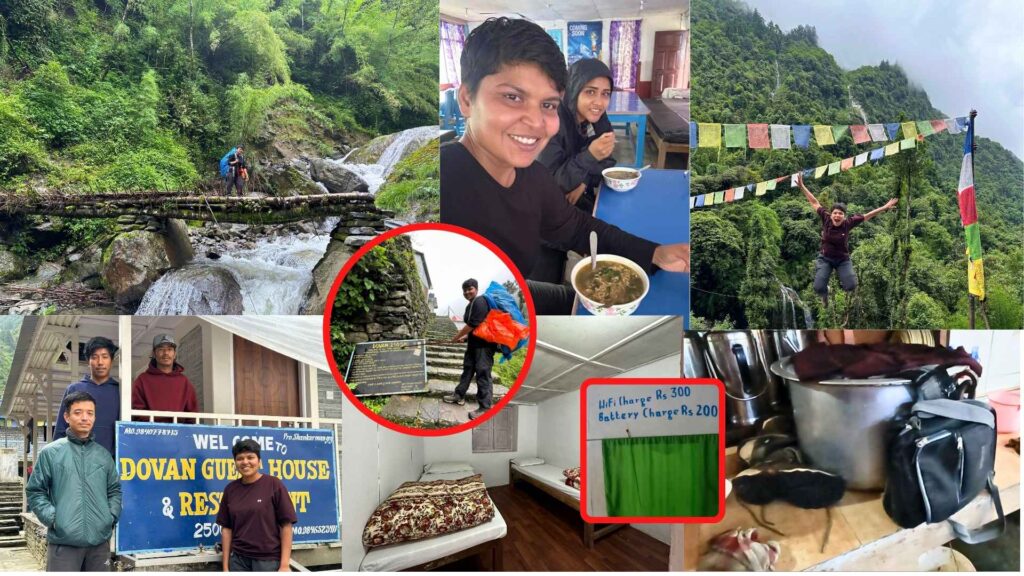
We planned to reach Upper Sinuwa last night but heavy rain made Lower Sinuwa our reality. Today we started early at 8 AM for the stiff two-hour climb. By 10 AM, Upper Sinuwa appeared, then the real jungle began—dense forests where bear and leopard warnings hung in the misty air. Waterfalls crashed everywhere, feeling like Meghalaya’s Cherrapunji in monsoon heaven.
From Upper Sinuwa to Bamboo took two hours across swaying bamboo bridges over roaring rivers, green lush hugging every step. Lunch at Bamboo fueled us for the final push to Dovan. Lucky break: At Chhomrong ACAP checkpost, we grabbed hotel numbers. Sujata called Dovan Guest House, explained my no-money trek mission—they welcomed us complimentary for stay and food. No hassle today!
Weather cooperated too. We reached Dovan before 5 PM with time to relax. Finally—a proper guesthouse after three wet days: geyser hot water, washing machine, WiFi, electricity! (Remember: mountains charge 200-300 NPR for phone charging, 100 NPR per hot water bottle.) My smile paid everything in off-season.
Early arrival brought magic. Manager played guitar—we sang Nepali “Ketiko” then my favorite “Lag Ja Gale.” Clothes dried by kitchen fire in giant utensil lids (mountain jugaad!). Hot baths felt like luxury. Dinner, then deep sleep. Warning signs appeared: avalanche and landslide zones ahead.
One of the greenest days ever:
Dense forests whispering secrets
Waterfalls crashing beside the trail
Bamboo bridges over wild rivers
Mist hugging the mountains
📍 Stay: Dovan Guest House
Day 3: Green paradise found. Ready for the danger zone.
Day 4: Dovan → Deurali via Hinku Cave (8 km)
Altitude Hits & Monsoon Triple Test

9:50 AM sharp from Dovan. By 12:20 PM, 2.5 hours later, Himalaya camp appeared. Quick 12:30–1:30 PM lunch break fueled the final push. 3:00 PM brought us to Hinku Cave—echoes of flowing water, birds chirping, wild saag plants we foraged, monkeys leaping through trees. White monsoon flowers glowed against surreal scenery: white clouds melting into deep green valleys, tiny houses clinging to slopes.
Post-Hinku Cave warning: Avalanche zone. Signs screamed “Move fast. No photos. Risky.” We obeyed.
4:20 PM Deurali (3,200 m). Body rebelled immediately:
Mild altitude sickness creeping in
Appetite vanished
Periods hit during peak monsoon—emotional, physical double exhaustion
7:00 PM rain returned, crushing hopes. ABC’s magic is mountain views, but clouds might steal tomorrow’s show. Stayed at 45-year-old New Panorama Guest House—mountains teaching surrender when everything fights back.
📍 Stay: New Panorama Guest House, Deurali
Day 4: Nature vs body. Surrender learned.
Day 5: Deurali 3,200 m → MBC 3,700 m → ABC 4,130 m). = 13kms
Altitude Hits & Monsoon Triple Test
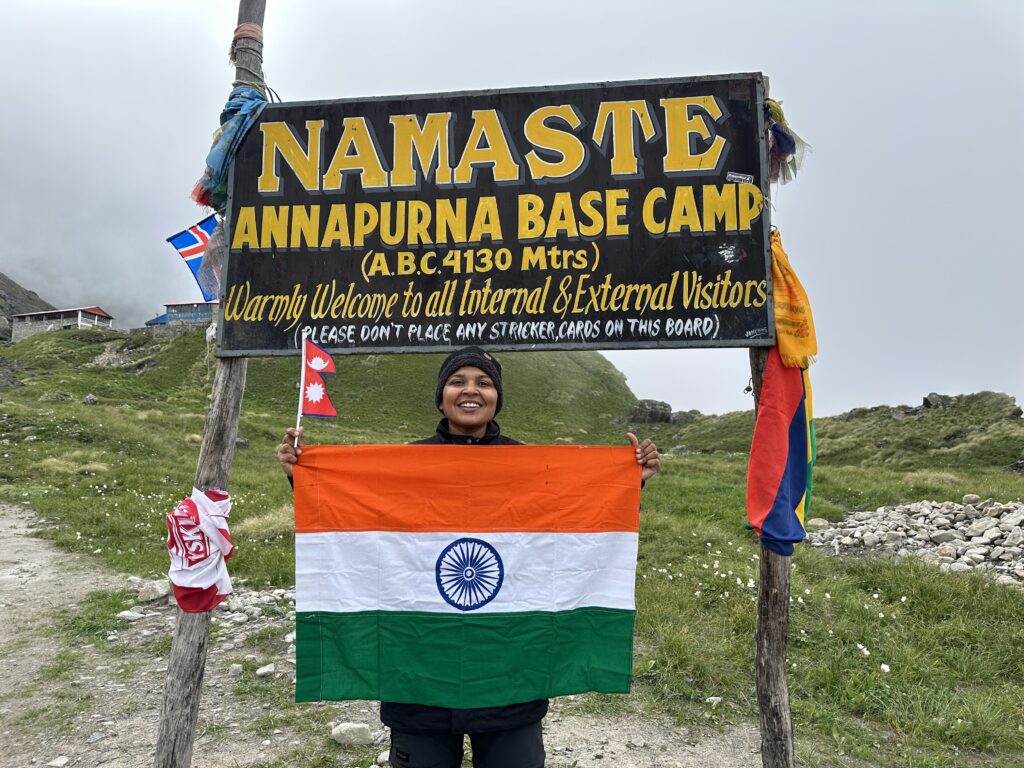
We left Deurali at 9:30 AM. By 12:45 PM, we reached Machhapuchhre Base Camp at 3,700 meters. Steady uphill on rocky/snowy paths through alpine meadows—no steep cliffs but constant elevation gain thins air fast.
This is the last stop before ABC with just 3-4 simple teahouses. a cluster of 3–4 basic teahouses with cold concrete rooms, shared toilets, no reliable WiFi or hot showers (extra if available), and solar power for limited charging. Spotted Annapurna medical checkpoint for emergencies—lifesaver at this altitude. We stopped at a cafe, but tea cost 400 NPR. Since I’m trekking without money, we couldn’t buy anything. Cafe tempted us, but no-money trek reality hit: 400 NPR tea? We skipped, sipping water with apples and dry fruits instead.
As we climbed from MBC, the 360° Himalayan embrace hit like a thunderbolt—Annapurna South loomed so close I swore I could reach out and touch her snowfields. Machhapuchhre’s fishtail ridge sliced the sky sharpest here, pure euphoria washing over me. A scruffy stray dog from MBC trailed us faithfully, becoming our silent guardian through the exposed alpine bowl.
Final push to ABC began. 4:00 PM arrival—the toughest day yet. Periods drained every ounce, altitude sickness hammered headaches and nausea, legs screamed. Pure willpower dragged me up. The final 2-hour climb felt gentle but endless—rocky path opening into the U-shaped sanctuary where Machhapuchhre’s “Sleeping Buddha” saddle appeared, that sacred ridge glowing like a reclined giant in afternoon light. Prayer flags fluttered ragged, stone memorials whispered past journeys, until blue-roofed teahouses signaled arrival—ABC Guest House and Sanctuary Lodge standing defiant at 4,130 m. Only one guesthouse standing (ABC has 4–6 basic lodges: Annapurna Guest House, Sanctuary Lodge, etc., with twin beds, blankets, dal bhat meals, but peak season books fast). Sujata’s pre-call worked—complimentary stay and food secured.
Hot tea revived us. We wandered till 7 PM acclimatizing, clicking photos/videos in fading light amid prayer flags and stone memorials.
Peaceful solitude. Everyone wakes 4-5 AM chasing pink-gold sunrise over Annapurna peaks—clouds often steal the show, but those rare clear moments? Life-altering.
Our MBC dog arrived too, curling by the kitchen fire. Dinner? Dizziness hit hard, so Dinner was light soup (altitude sickness classic). Hearts full, eyes teary—”No summit needed,” I whispered. “This amphitheater bowl is the real victory.” The Himalayas had claimed another soul. crashed early for sunrise wake-up call.
📍 Stay: ABC Guesthouse
Day 5: Body broken, spirit unbreakable. Tomorrow’s dawn awaits.
Day 6: Dawn Gamble – Will ABC Reveal Her Peaks?
“4 AM. Wind bites, heart races. Monsoon’s final test: will Annapurna show her face?”

6 AM. Wind howled like a Himalayan wolf, biting through every layer—fingers numb, face stung red by freezing gusts sweeping the exposed bowl. Clouds clung stubborn, teasing “no views today.” Then—crack. Sun pierced east through the icy blast, painting Annapurna South pink-gold first. Gasped as Machhapuchhre ignited orange, Hiunchuli blushed rose. Flag in hand, tears froze on cheeks. 20 minutes pure magic—mountains roared through wind, “You earned this, warrior.” Then clouds swallowed it back. Didn’t matter. That glimpse? Worth every blister.
Annapurna: The Goddess Who Fills Every Hunger (Story Time)
“4 AM. Wind bites, heart races. Monsoon’s final test: will Annapurna show her face?”

As I stand here at Annapurna Base Camp, surrounded by these mighty peaks, one should know the beautiful story behind the name “Annapurna.” Let me tell you the mythology.
Annapurna means “full of food” in Sanskrit—anna (food) + purna (complete). She’s the Hindu goddess of nourishment, wife of Lord Shiva. Once, Shiva declared he didn’t need food to survive. Annapurna vanished to teach him a lesson. The world plunged into famine—gods and humans starved alike.
Desperate, Shiva searched Varanasi’s streets. There sat Annapurna, serving endless rice from a single golden bowl. Even Shiva bowed to eat. She proved: food is sacred power, even gods need grains to live.
Nepal named this massif after her—streams from these slopes feed entire valleys below. Standing here at her feet, I feel that divine nourishment in every breath.
Peaks Visible from ABC (Clear Days)
From the 4,130 m sanctuary bowl, 7 main peaks surround you in a 360° embrace:
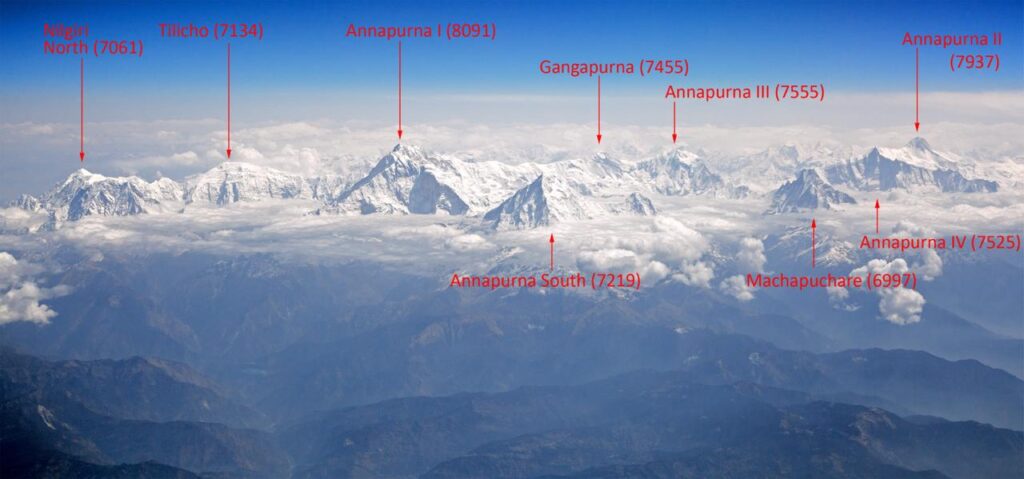
- Annapurna I (8,091 m) – The deadly queen, first 8,000-er climbed (1950)
- Annapurna South (7,219 m) – Jagged south wall dominates east
- Hiunchuli (6,441 m) – "Melting snow peak," sharp western ridge
- Machhapuchhre (6,993 m) – Sacred fishtail, unclimbed by respect
- Gangapurna (7,455 m) – Northeast guardian with glacier lake below
- Annapurna III (7,555 m) – Graceful southwest pyramid
- Gandapurna (6,448 m) – Smaller but striking northwest
Monsoon bonus: Clouds part briefly, making these giants feel personal—like the goddess herself lifted the veil just for you.
Day 6: ABC → Bamboo (18 km)
Rain Returns, Kindness Saves the Day

10 AM post-sunrise breakfast. That golden glimpse fueled our legs for the long 13 km / 8–9 hour descent back through Deurali, Himalaya, Dovan—same rocky path, now knees-jarring downhill. Heavy rain hit hard by noon, turning trails to mud rivers, swollen streams roaring over bridges. Trekkers call this “longest punishment day”—legs burn, focus slips. The descent kicked off with rain crashing back down—nonstop, pounding, merciless. Every step down from ABC turned trails into rivers, clothes clung like second skin. Then Bamboo Lodge appeared like salvation through the grey curtain.
Soaked and shivering, we ducked into a random guesthouse midway. No money, just my story. Owners heard my no-money mission—smiles lit up. “Stay. Eat. Rest.Locals welcomed us with warm hands, not questions. “Sit. Eat.” They slid over fresh pancakes—fluffy, golden, so different from endless dal bhat. A taste of comfort when we needed it most. Dry fruits from our pack became instant energy, hands shaking as we ate by the fire. hot tea, dry corner by fire. Pure Himalayan generosity, like so many blogs rave about: “Teahouse magic turns strangers to family.”
Pushed on carefully—landslide scars fresh from rains, paths slick as soap. Bamboo welcomed by evening: dense bamboo forests, Modi Khola thundering below. Views? Cloud soup. But heart full from kindness.Village kids spotted us, curious eyes turning to giggles. We played tag in the downpour, laughed loud and free—pure joy washing away trail pain. Through rain-streaked windows, we watched locals hauling grass bundles, rice sacks, daily life loads up slippery paths. No complaints, just steady steps. Their quiet strength reminded us: mountain life thrives simple, unbreakable.
📍 Stay: Bamboo (teahouse generosity)
Rain won terrain, humans won hearts.
Day 7: Bamboo → Chumrong → Jhinu Danda (12 km)
Final Rainy Push Home

Rain still poured when we woke. Pancakes for breakfast—a sweet goodbye gift from our Bamboo family. Hugs, photos, grateful thanks, then we hit the trail. Last trek day: Bamboo to Jhinu Danda (1,780 m, ~8 km, 5–6 hours)—steep 500 m drop first up to Sinuwa ridge, then endless stone stairs down past Chhomrong’s stupa and teahouses to the river bridge.Bamboo’s steep 500m climb back to Sinuwa ridge, then endless stone stairs past Chhomrong—famous for the highest, best lodges in ABC country with valley views on clear days. [We celebrated with hot pizza there—because why not? 🍕 Knees screamed, stomachs cheered.]
Route reality: Forest paths wind through rhododendron and oak, crossing Kimrong Khola streams. Knees scream on the descent—trekkers call it “quad burner.” Reach Jhinu before evening? Jeep to Pokhara (3–4 hours bumpy, NPR 1,000–1,500). Late? Hot springs overnight.
Rain worsened, turning stairs to waterfalls. Shivering, soaked, we knocked at Jhinu guesthouse. Shared my no-money mission—they beamed, “Happy to help!” Free stay, dal bhat dinner. Jhinu Hot Springs tempted (20 min downhill geothermal pools by Modi Khola)—but cold + rain won. We burrowed under blankets, ate warm dal bhat, and crashed. Tomorrow: homeward roads.
📍 Stay: Jhinu Danda Guesthouse
Final night. Springs waited. Sleep called louder.
Day 8: Jhinu Danda → Pokhara
Jeep from Jhinu Danda: Full Details (Monsoon 2026)
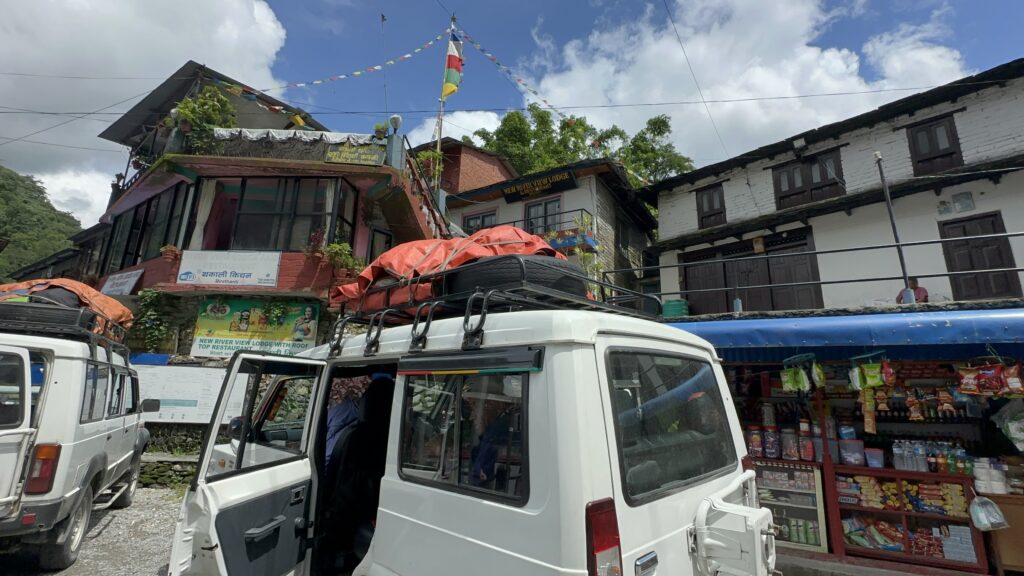
Where to Get Jeep
Main Stand: Jhinu Jeep Station / Roadhead (1.2 km / 15–20 min flat walk downhill from Jhinu Danda village). Follow signs or ask locals—trail meets rough dirt road.
From Village: No jeeps enter Jhinu proper. Walk to roadhead where vehicles wait.
How Much to Walk
Jhinu Danda → Jeep Stand: 1–1.5 km, 15–25 min easy downhill on stone/dirt path. Carry light pack.
Full Exit Option: Jhinu → Swaidi/Nayapul (12 km, 5 hrs trek) + bus/jeep to Pokhara.
Timings (Monsoon June–Aug)
Shared Jeeps: Depart 7–9 AM from stand (fill capacity first). Last reliable 2–4 PM. Monsoon delays common (landslides, mud).
Private Jeep: Anytime—book ahead via guesthouse or Pokhara agents.
Monsoon Reality: Roads close 2–3 PM often due to rain/landslides. Aim by 1 PM at stand for safe catch. Night drives risky (no lights).
Cost (2026 Prices)
| Type | Cost | Seats | Notes |
|---|---|---|---|
| Shared Jeep | NPR 1,350–2,000/person | 6–8 | Hari Chowk (Pokhara) departure point. Cheapest. |
| Private Jeep (Mahindra Bolero/Scorpio) | NPR 15,000–25,000 ($100–$170 USD) | 6–7 | Hotel pickup. Rain surcharges possible. |
| Land Cruiser (4WD luxury) | NPR 25,000+ | 6–7 | Best for monsoon mud. |
3–4 hr ride, 55–62 km rough off-road (Kande–Nayapul–Pokhara). Bumpy but scenic valleys/rivers.
Monsoon Tips
Road Risk: Heavy rain = landslides daily. Jeeps stop 1–2 hrs sometimes. Carry rain gear, snacks.
Booking: Guesthouses call ahead. Apps like Pathao/Tootle unreliable here—cash only.
Alternative: Trek to Siyauli (2 hrs) + bus (NPR 500, 2 hrs to Pokhara).
Pro Tip: Reach stand by noon monsoon days. Private jeeps run till 5 PM if road open. Safe travels!
Homecoming: Jeep Songs, Embassy Warmth & Endless Gratitude
Final Rainy Push Home

Next morning, we packed up and started walking down at 7 AM sharp. At the Jhinu jeep stand, we found a shared jeep—perfect timing. The bumpy scenic road to Pokhara became our rolling concert hall. We sang old Hindi songs, laughed through dust clouds, mountains fading behind us.
I called the Indian Embassy pension office in Pokhara ahead. By arrival, their driver waited at Hari Nagar with a smile. Dropped Sujata home first—tight hugs, teary thanks—then straight to the embassy guesthouse. Hot bath after 7 days felt like pure miracle. Laundry whisked away muddy clothes. The chef served chapati, curry, dal, cutlets—I ate like someone seeing roti after years of dal bhat power packs. The embassy felt like my own home abroad.
Heartfelt thanks to:
All guesthouses—New Peaceful (Landruk), Super View (Sinuwa), Dovan Guest House, New Panorama (Deurali), ABC Guesthouse, Bamboo Lodge, Jhinu Danda—your complimentary stays and meals made the impossible possible
Lt. Col. Prashant Singh sir—every help, every step supported
Three Sisters Trekking—gave me Sujata, made victory possible without charging a rupee
Jain community + Indians in Nepal: Tarun bhaiya, Shalini bhabhi, Dinesh ji, Manoj ji
Kathmandu connections: Sancheti uncle (linked to Tarun ji), Ashok uncle from Birganj (linked to Dinesh ji)
Every small kindness stitched this impossible dream into reality.
Mountains tested my body. Strangers restored my faith. Annapurna lives in my heart forever.